The Battery Storage
Availability Put.
A contractual floor on availability. We guarantee uptime, so lenders underwrite, investors model, and developers close — without holding the operating risk themselves.
The Put
The Platform
We've built systems across technology and finance




01
How the Put works.
Three steps from eligibility review to monthly cash settlement.
STEP 01
Assess
Asset eligibility review: chemistry, OEM, site, interconnection. 2-week diligence.
STEP 02
Strike
Contract sets availability floor (e.g. 97%). Premium sized by risk model.
STEP 03
Settle
Monthly attestation. Shortfalls paid in cash to the borrower or project LLC.
02
The problem.
Battery storage is under-leveraged. Operating risk is sitting in the equity check.
- Banks offer less debt — the cheapest capital — because availability and dispatch risk aren't underwritable today.
- Sponsors are forced to commit more equity, the most expensive layer in the capital stack, to absorb that gap.
Battery storage
55%
Solar
70%
Aircraft leases
81%
Student loans
84%
Equipment loans
89%
Auto loans
92%
Home mortgages
99%
Advance rate by asset class. Source: S&P, Fitch, Kroll, Moody's, Marathon Capital.
03
The solution.
A contractual availability floor that banks can underwrite against.
- Investment-grade insurers backstop availability shortfalls on the asset.
- Banks get comfortable lending more against credit-enhanced cash flows — moving BESS closer to the advance rates the rest of project finance already enjoys.
Telemetry
+
Engineering
+
Insurer
→
Lower risk · Lower cost · More storage
04
Before & after.
Where the Put sits in the capital stack — and what it changes for both sides of the table.
Before
Sponsorwants more debt
⇄
BESS assetuninsured operating risk
⇄
Bankwants to lend safely
After — with the Availability Put
Sponsor
→
Availability Put
Backed by investment-grade insurers
←
Bank
Sponsor gets
- Better debt terms
- Lower cost of capital
- Less equity needed per project
- Higher equity IRR
- Product pays for itself
Bank gets
- Credit enhancement backed by insurer
- Lends more, with confidence
- Wins more deals against other banks
Cost of capital is the biggest single line item on a battery project. Tightening it reshapes which projects get built — and who builds them.
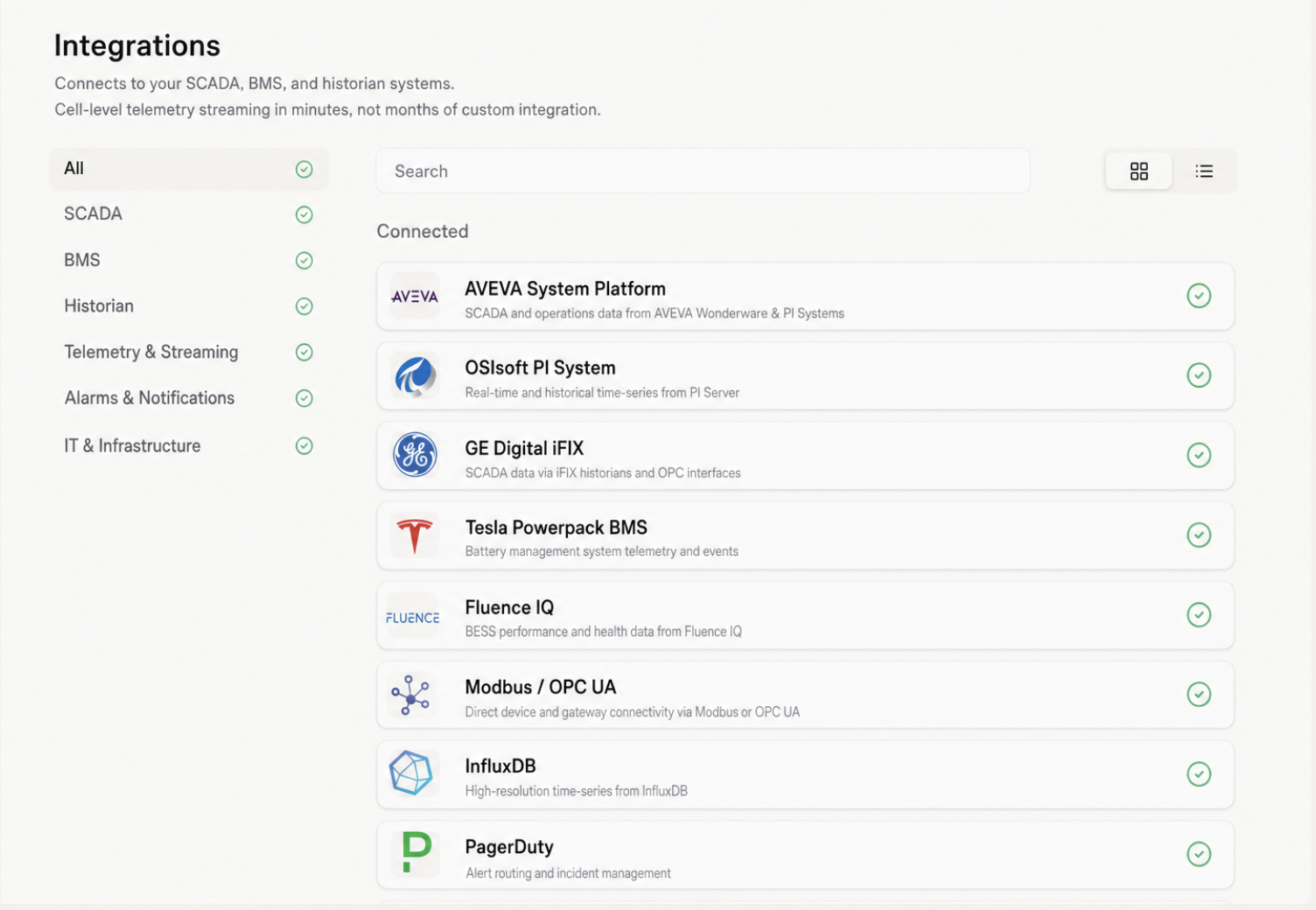
Understands your battery fleet
1
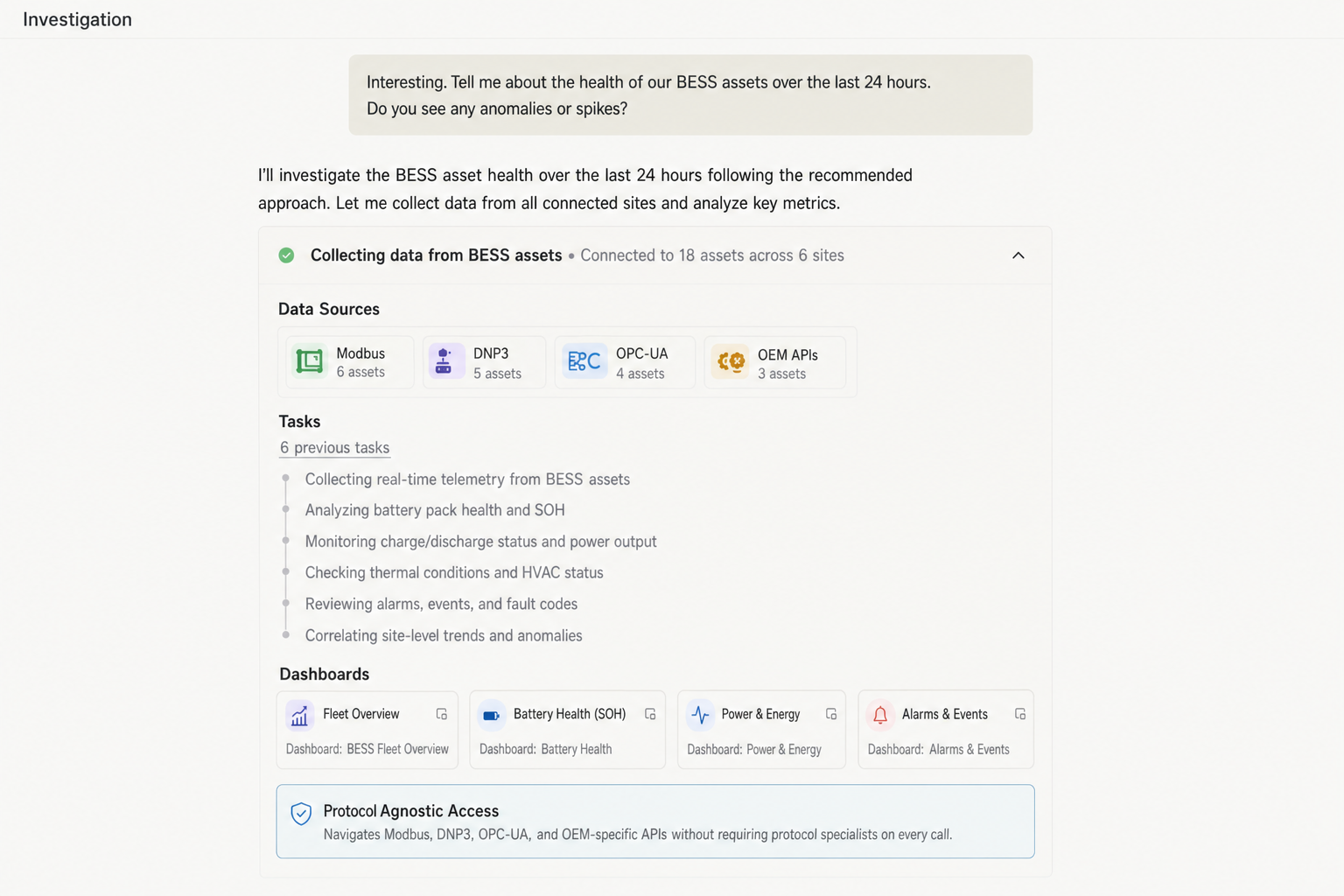
Connects to your SCADA, BMS, and historian systems. Cell-level telemetry streaming in minutes, not months of custom integration.
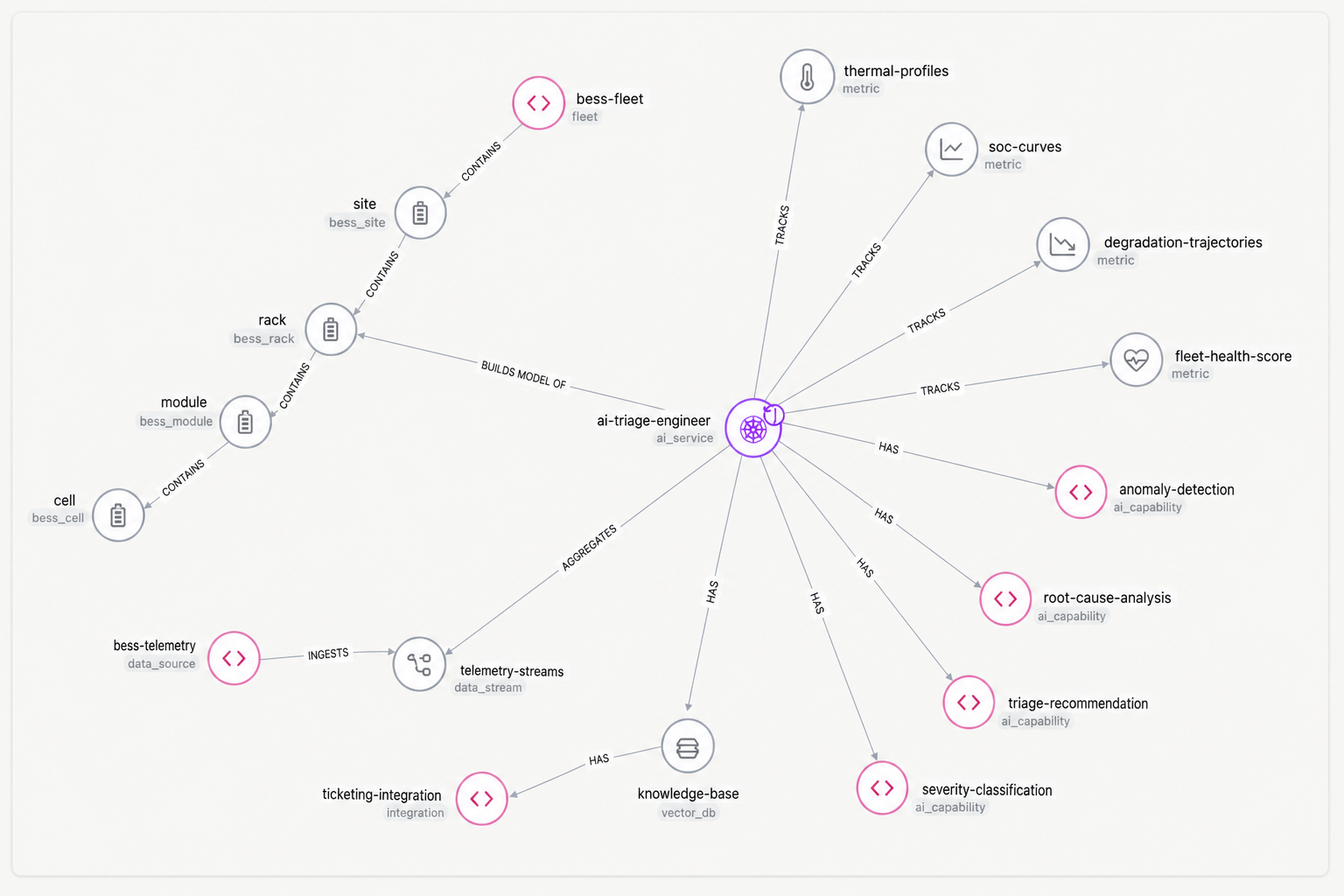
2
Builds a real-time model of every rack, module, and cell. Tracks thermal profiles, SOC curves, and degradation trajectories across your fleet.
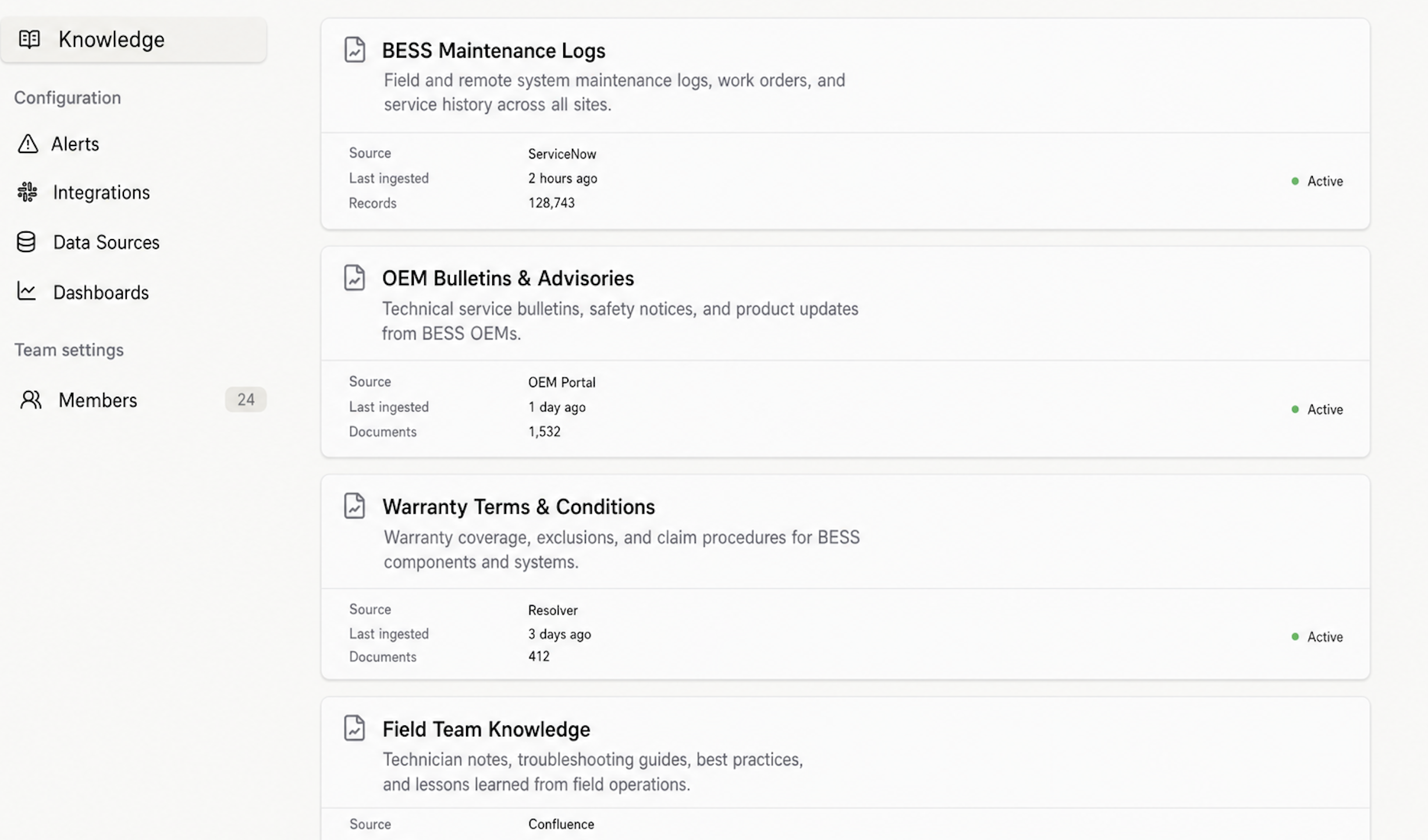
3
Ingests maintenance logs, OEM bulletins, warranty terms, and field team knowledge into a unified context layer.
Reasons like a seasoned field engineer
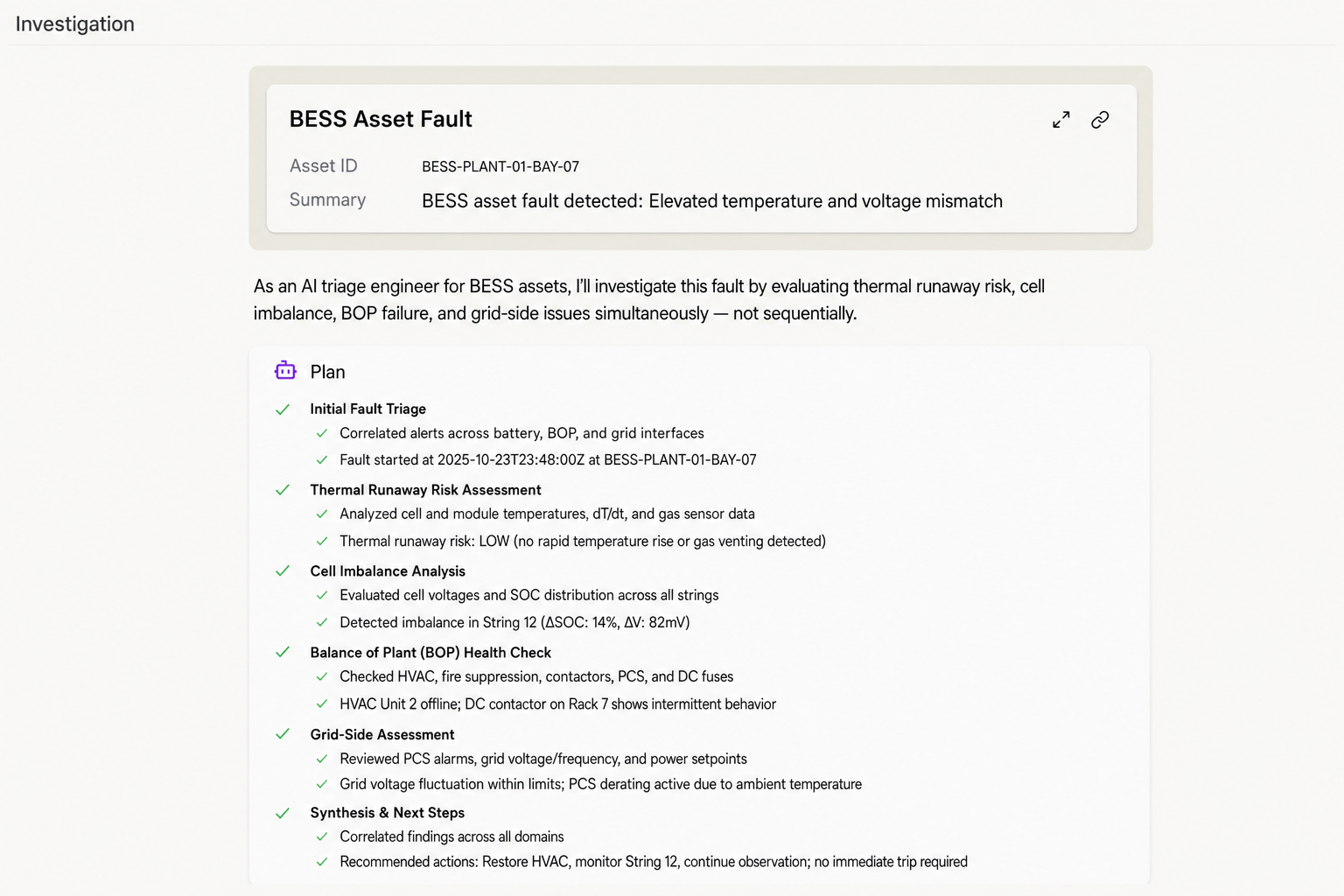
1
When a fault surfaces, it investigates thermal runaway risk, cell imbalance, BOP failure, and grid-side issues simultaneously — not sequentially.
2
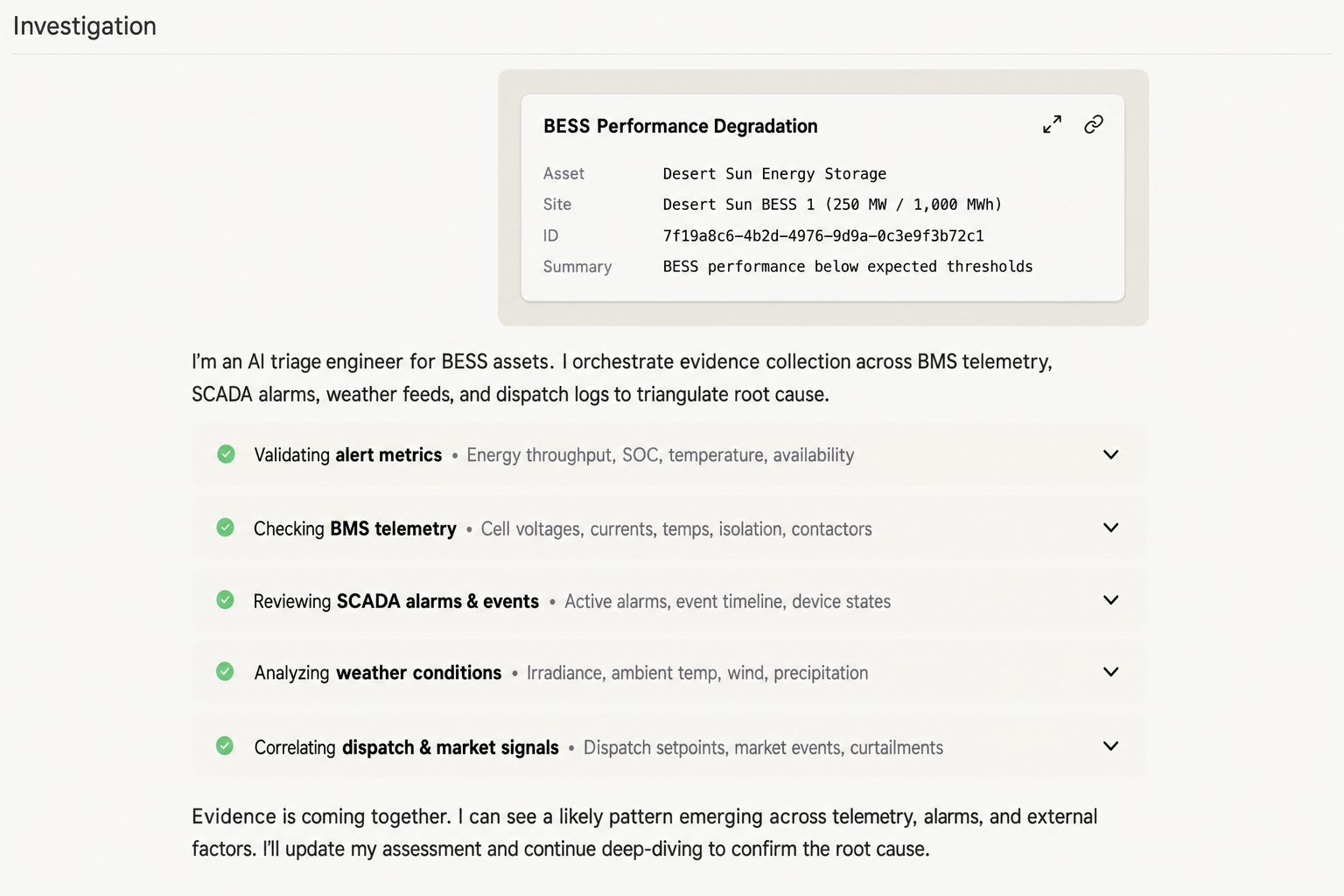
Orchestrates evidence collection across BMS telemetry, SCADA alarms, weather feeds, and dispatch logs to triangulate root cause.
3
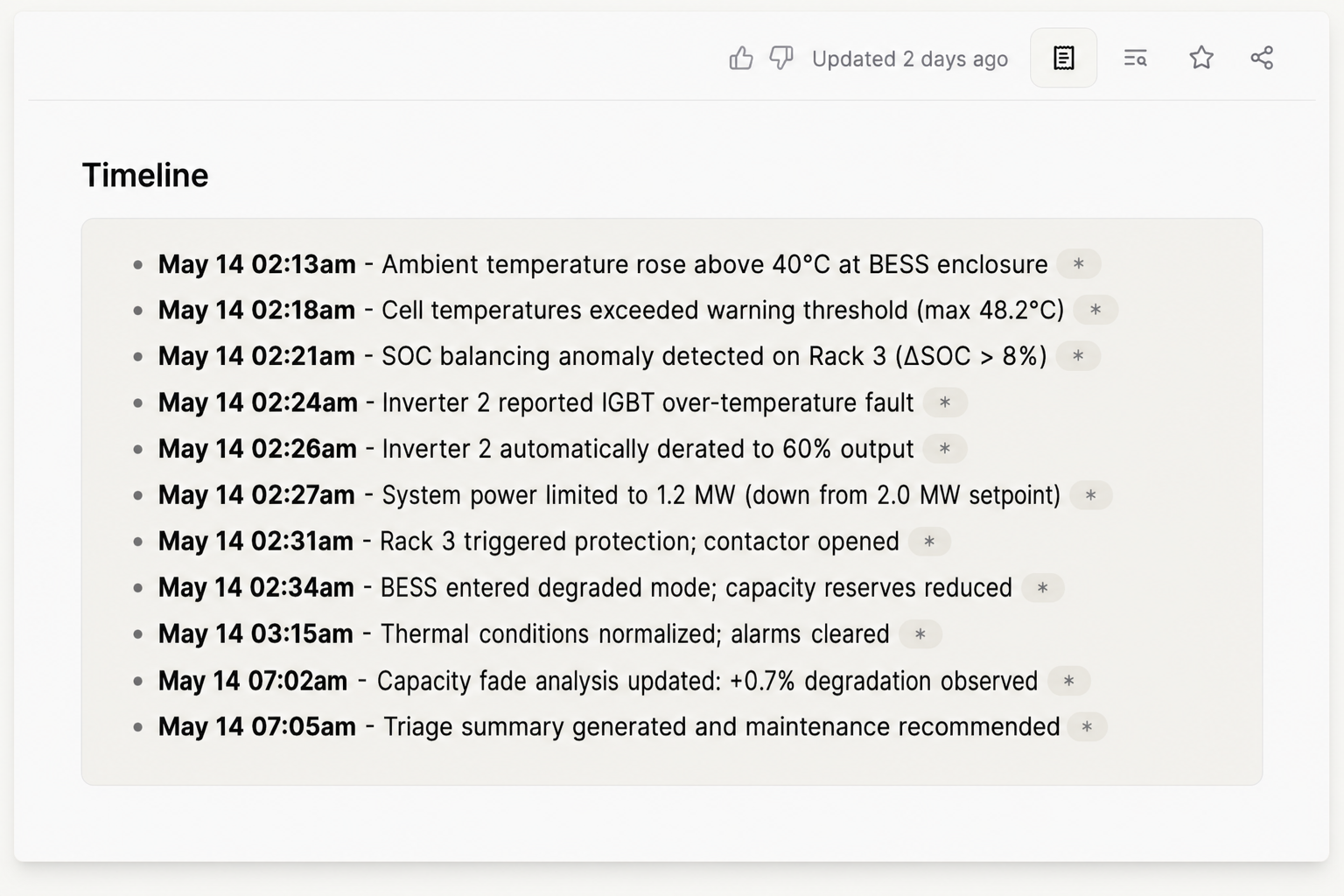
Builds causal timelines linking thermal events, SOC anomalies, inverter faults, and capacity fade into a single diagnostic narrative.
Operates your tools like an expert
1
Auto-generates work orders in your CMMS, assigns field technicians, and tracks resolution — closing the loop from detection to repair.
2
Navigates Modbus, DNP3, OPC-UA, and OEM-specific APIs without requiring protocol specialists on every call.
3
Coordinates cross-domain investigations spanning electrical, thermal, controls, and commercial systems in a single triage workflow.
The platform behind the put
The guarantee is only as good as the tools that improve it.
Behind the Put sits our platform: custom sensors, SCADA integration, and CMMS automation that lets us monitor and accelerate triage interventions.